
Why Deduction Management Needs to Be Both Automated and Integrated




Why Deduction Management Needs to Be Both Automated and Integrated
Most CPG finance teams are managing deductions the same way they did five years ago:
logging into multiple retailer portals, downloading remittances, requesting PODs from freight
carriers, building dispute packages across three separate systems, filling out retailer-specific
forms, and tracking status in a spreadsheet. If denied, starting over.
This process works when deduction volume is manageable and the team has capacity. Neither
condition holds for most growing brands today. Moreover, the structure of manual work creates
systematic blind spots that cost brands revenue they never see.
Understanding why automation is necessary, and why it only fully works when cash application,
deductions, and trade promotion management live in one connected system, is the key to
building a deduction process that wins at scale.
The Economics of Manual Work Create Structural Losses
Finance and ops teams spend an estimated 10 to 15 hours per month centralizing deduction
data, before anyone has built or filed a single dispute.
Beyond the time cost is a deeper problem: manual economics create systematic blind spots. A
human analyst triaging deductions will naturally prioritize a $15,000 shortage claim over a $300
early payment charge. But across a year of volume, those $300 charges sum to thousands of
dollars in uncontested write-offs. Service-based deduction firms operate the same way. Their
economics don't support working small-dollar claims. So those deductions quietly disappear,
and retailers have no incentive to stop taking them.
The blind spot extends to promotional deductions too. When a retailer deducts $40,000 for a
scan-back, your AR team sees the deduction, but the trade promotion data may live in a
different system, or in a spreadsheet managed by a different team. Someone has to manually
check whether this promotion was authorized, what the agreed dates and rates were, whether
the correct amount was applied, and whether this deduction has already been matched to an
accrual.
This is the reality for most CPG brands today, and three market trends are making it structurally
worse.
Three Trends Making Manual Untenable
Deduction volumes are growing aggressively. Retailers are deducting more across every
category. The volume a team could manage manually two years ago is significantly higher
today, and it's still growing.
The documentation bar is rising. Retailers are demanding more detailed backup per claim (e.g.,
BOLs, PODs, invoices, and in some cases photos of shipments) in their specific format. The first
submission increasingly has to be the best submission.
Filing windows are tightening. The margin for error is shrinking. A deduction that arrives on a
Friday and isn't triaged until the following week is already behind.
The compounding effect of these three trends is a structural disadvantage for manual teams that
grows worse over time. The brands that recognize this and automate early gain a compounding
advantage.
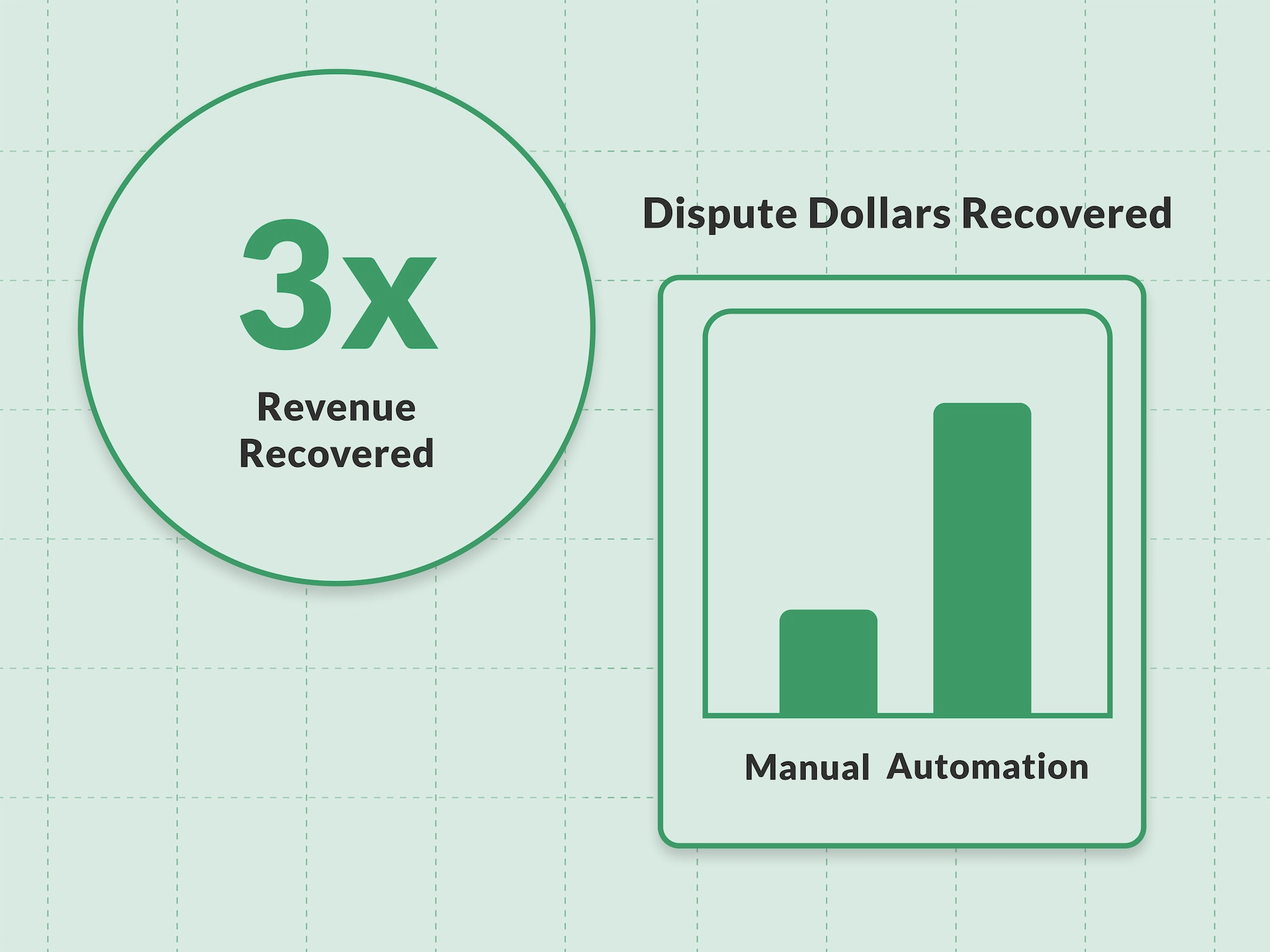
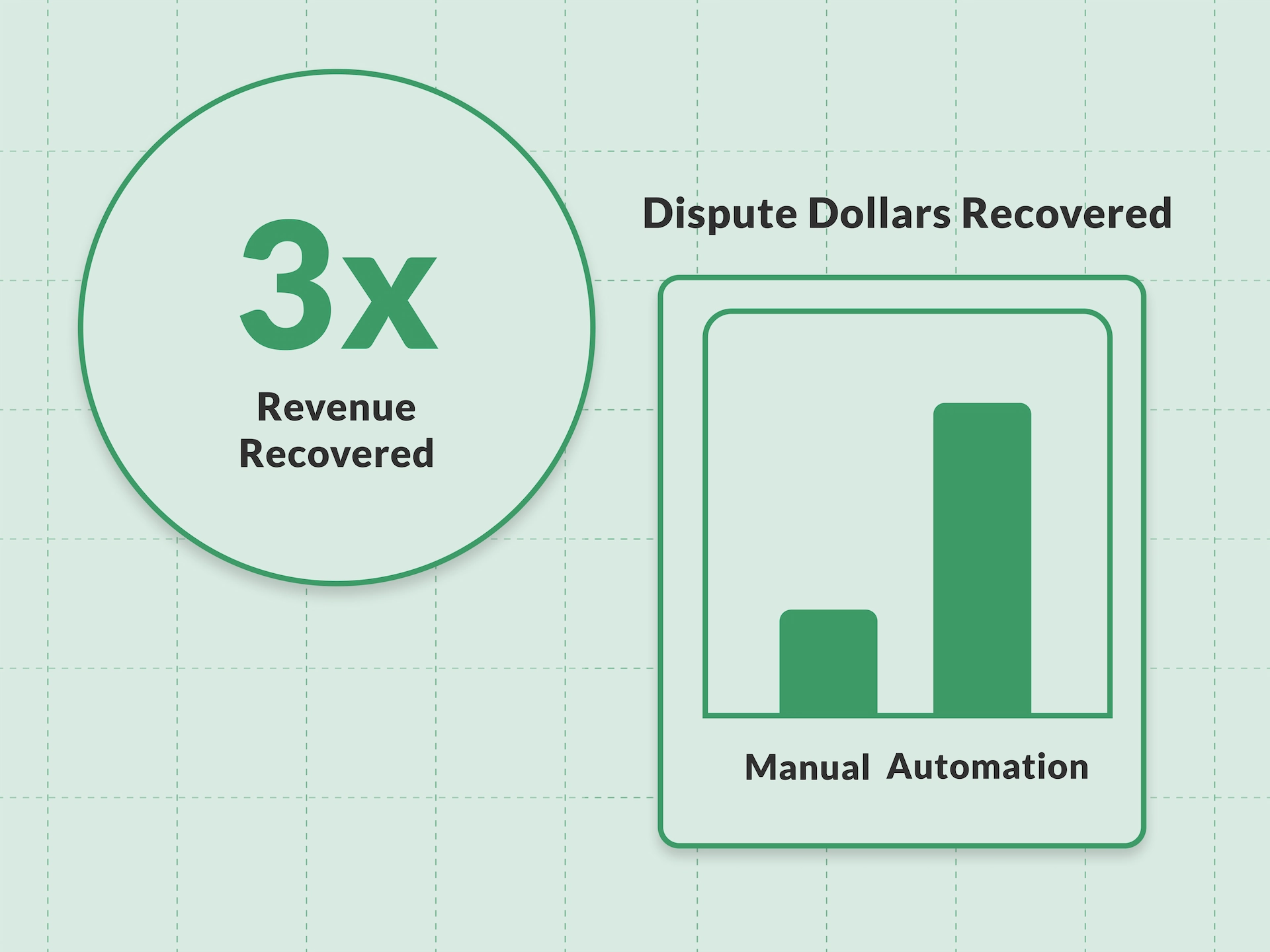
The 3x Recovery Gap
Data across CPG brands consistently shows that brands using automated dispute workflows
recover approximately 3 times more revenue than teams relying on manual processes. Four
factors explain the gap:
Coverage. Automated systems catch and triage every deduction. Manual teams inevitably miss
claims because of bandwidth constraints, expiring windows, and items that fall through the
cracks.
Speed. An automated system processes and files a dispute in seconds. A manual team may
take days.
Completeness. Automated systems pull and attach all required documents every time. Human
teams submit incomplete packages more often than they realize.
No dollar floor. This is the compounding advantage that rarely gets discussed. Manual teams
won't work a $200 deduction. Automation has no cost per dispute so every disputable claim gets
filed, including small-dollar early payment charges that add up to thousands over a year.
Eliminating the dollar floor also changes retailer behavior: when every invalid deduction gets
contested, retailers have less incentive to issue them in the first place.
Why Automation Only Fully Works When the Systems Are Connected
Automation alone (i.e., a tool that automates dispute filing without connecting to your trade and
cash data) solves half the problem. The other half is the reconciliation that has to happen before
a dispute can be filed and after a payment arrives.
Consider the three workflows that currently operate in parallel in most CPG finance teams:
Cash Application:
Retailers pay in bulk, with one check covering dozens of invoices and
deductions, often with remittance data that does not match your ERP. Manual application is slow
and error-prone. Cash goes unapplied, AR is distorted, deductions are miscoded, and invoices
stay open.
Trade Promotion Deductions:
Every promotion drives deductions, but validating them requires
checking the original agreement. Teams must confirm authorization, timing, rates, and
duplication. Without that context, significant time is spent determining what is valid.
Accrual Matching: Deductions should be matched to promotion accruals to close out liabilities.
When trade and financial data live in separate systems, accruals remain open and finance lacks
a clear view of what is truly outstanding.
These aren't three separate problems. They're one problem: disconnected data forcing humans
to do connections that should happen automatically.
When cash application, deductions management, and trade promotion management live in the
same platform, the manual reconciliation work largely disappears.
The Strategic Value: Seeing Your Real Trade Economics
Beyond operational efficiency, integration between cash application, deductions, and trade
promotion management gives you something more strategically valuable: a clear, accurate
picture of what your retail business actually costs you.
When everything is connected, you can answer questions like: What's the true net revenue on
each SKU at each retailer, after trade spend and deductions? Which promotions generated the
most deduction activity and were they worth running? Are you being systematically
over-deducted on specific accounts relative to agreed promotional terms? Which retailers have
the highest ratio of unauthorized or duplicate promotional deductions?
These answers transform trade planning. You can see which retailer relationships are profitable
net of all costs, which promotional formats generate the most invalid deduction activity, and
where you have leverage to negotiate better terms. Your deduction history becomes negotiating
leverage vs. an accounting problem.
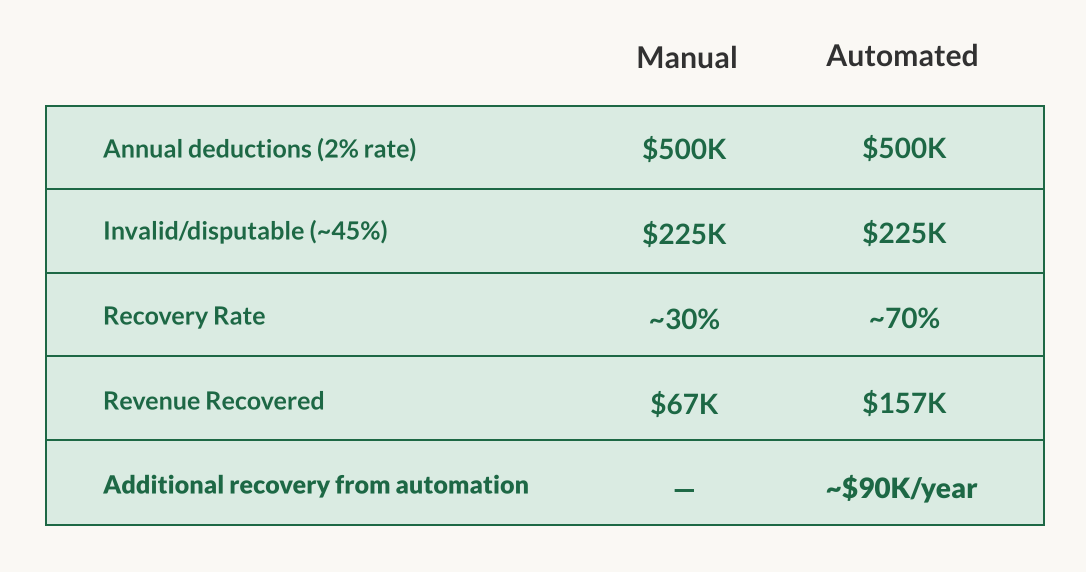
The ROI Case
For a brand doing $25M in annual retail sales:
The Bottom Line
The brands winning at deduction management today aren't winning because they have bigger
teams. They're winning because they've systematized the process and they've connected the
systems so the data flows automatically between cash application, trade promotion
management, and dispute filing.
Service-based deduction firms add people to a broken process. Point solutions automate one
step without fixing the connections. The shift happening across the CPG industry right now is
toward integrated platforms: one connected system where everything talks to each other.
The window to gain a competitive advantage on this is open now. As deduction volumes rise
and documentation requirements tighten, the brands that automate early will have cleaner
dispute records, better retailer relationships, and a compounding head start.
.webp)
.svg)
Explore More Resources
.jpg)