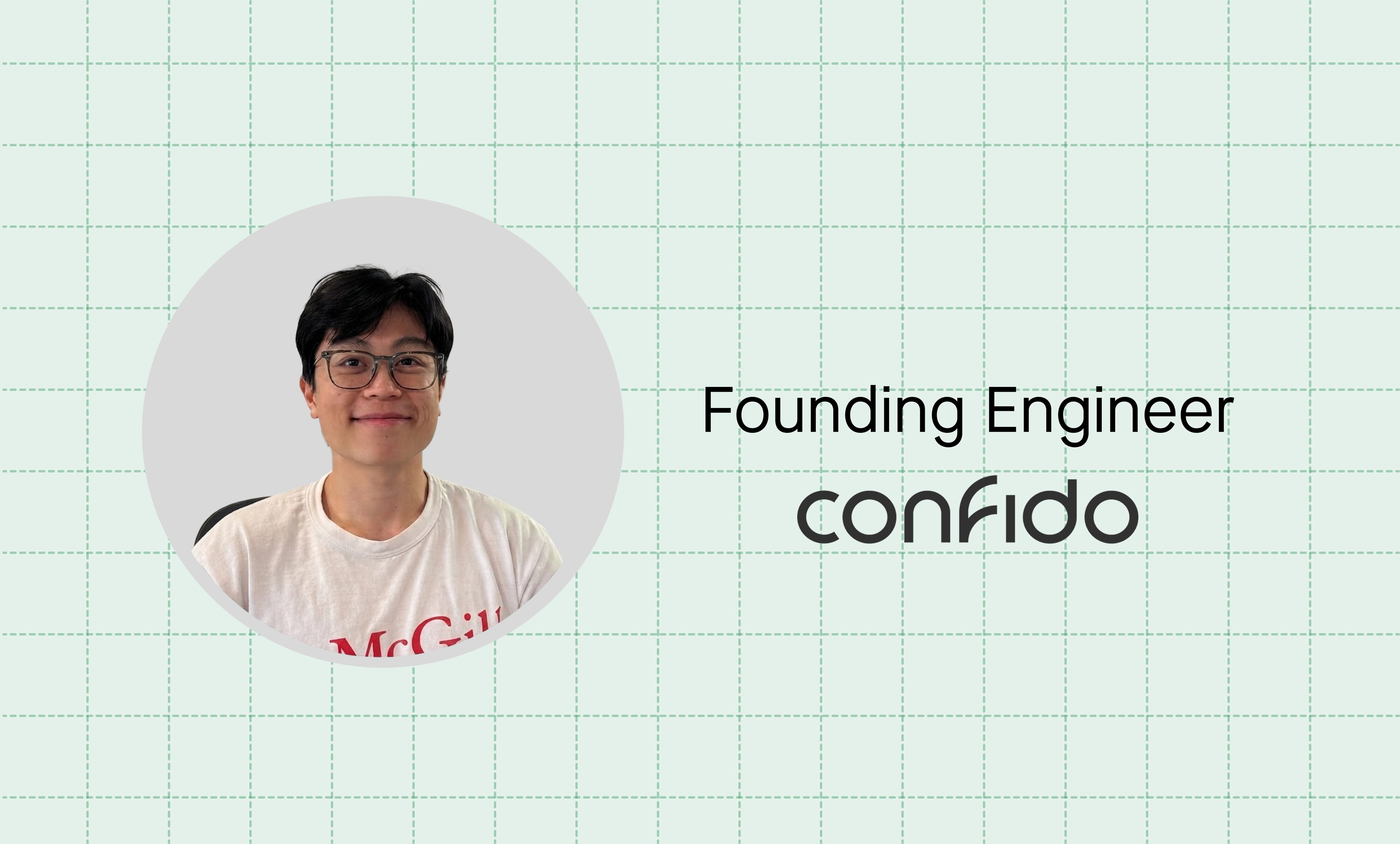
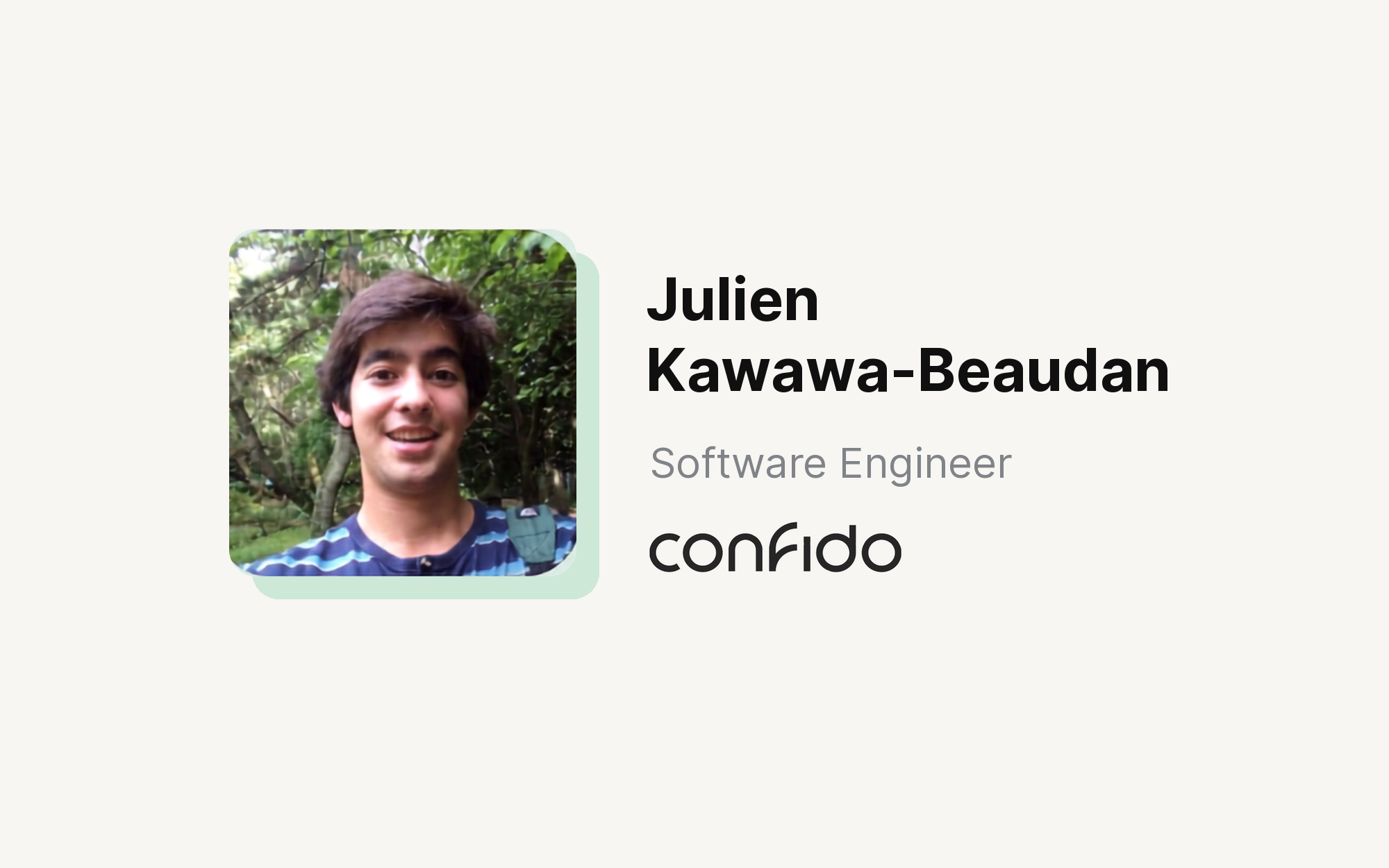
From Big Tech to Start Up: A Conversation with Julien Kawawa-Beaudan




What brought you to Confido?
I started my career at Google, working on YouTube for about five years, and every move since has been to a smaller company. The smaller the team, the more ownership you get. As an engineer here, you have real input into what we build next and what needs to improve. I'd also worked on a startup idea with a friend in food distribution, so CPG has been an interest of mine for years. CPG isn't the space most of tech chases, which is exactly what makes it interesting. The logistics inside these businesses are genuinely fascinating, and it was exciting to see Confido solving problems I'd run into firsthand.
What has surprised you most about working here?
How quickly we can ship when we focus. Demand Planning is a good example: we had pieces integrated across the product, but pulling it together into an initial MVP took about two months. Having a target, getting it into people's hands, and learning from there is night and day from a big company, where small changes take weeks or months.
The Platform team is new as of Q2. Why does it exist?
The product has grown fast, and with eight modules, different teams naturally run into the same engineering problems. The platform team exists to solve each of those problems once, so every team can build on top of it and move even faster. If someone builds a new type of forecast, exporting it should just work without a second thought. We're also investing heavily in monitoring and observability, so we always know exactly how the platform is performing for customers.
What are you working on right now?
Reporting. CPG data is genuinely complicated, spread across retailers, distributors, and internal systems, and one of Confido's biggest advantages is standardizing all of it into clean, trustworthy views. Now we're taking that further: customers will be able to connect to our data warehouse and pull out everything, and eventually build fully custom reports directly in the product, slicing and dicing however they want. We already give people incredibly rich standardized views. The next step is handing them the full flexibility on top of that.
How has AI changed how you work as an engineer?
It's night and day from a year ago. Most of my time now goes to planning how to build something or investigating why it isn't working as expected. Once you know how you want to solve a problem, AI can handle a lot of the actual implementation. The interesting shift is that everyone is using AI to write code, so the volume of changes to review has exploded. A lot of the work now is setting up the right context so your AI review agents remember the feedback you gave weeks ago and apply it automatically next time.
Where does human judgment still matter most?
Business context. A change might look right until you know the use cases that make a different solution the better one. There's also knowledge you only get from watching the system break: the pattern an AI suggests first might be one we tried and abandoned for good reasons. And our scale matters. Solutions that work for an app with small data don't always hold up against the volume of forecast and sales data we handle.
What do you do outside of work?
I enjoy biking around the city, and I've been starting to train for the NYC Marathon which I’m hoping to do next year.
What kind of engineer thrives at Confido?
People who are proactive about the product. If you see something that can be improved, you don't wait for someone to hand you a roadmap. You start hacking together a fix, and just as importantly, you bring a clear proposal and sell the team on why we should solve it that way.
Anything else?
There are plenty of companies pushing the frontier on AI models themselves. What Confido does is arguably harder: taking the messy, real-world data these brands run on and making it clean, structured, and usable. That's the foundation everything intelligent gets built on top of, and it's where we create a huge amount of value for our customers.
.webp)
.svg)
Explore More Resources