Two Years In: A Conversation with Confido's Founding Engineer
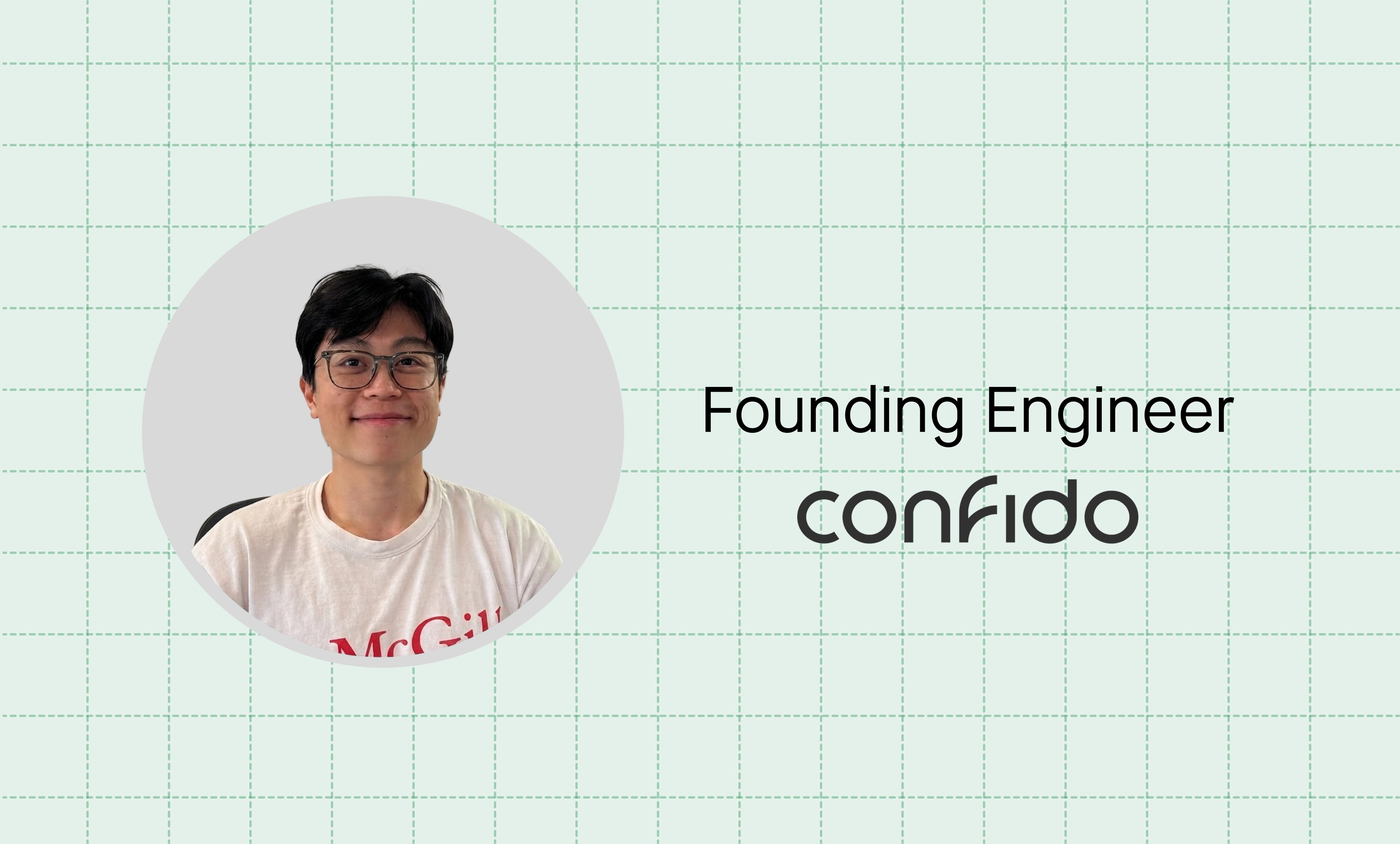




Two Years In: A Conversation with Adrien
Adrien joined Confido as one of our earliest engineers in June 2024. Two years and one Platform team later, he talks scale, why the modules connect, AI, and focaccia.
What brought you to Confido?
After McGill I interned at a large firm, Charles Schwab, but I knew I wanted startups, and every move since has been to a smaller team, because the smaller the team, the more I learned. Gusto taught me a ton; then I was the third engineer at another startup, where I picked up everything around the code, too. I was looking for founders focused on growing and empowering their team. Justin and Kara had exactly that.
How has engineering here changed in two years?
When I joined we were seed-stage, so the job was mostly about understanding the product and customer deeply. That still matters, but now we’ve shifted to building for scale. The question is less "does this work?" and more "how do we do this for large enterprise customers?"
Why is it so important that the modules connect?
Our customers’ workflows are connected, but today they’re fragmented across disconnected tools, and that creates real inefficiency. We want to give them one place to manage everything, end to end. From an engineering angle it’s a great problem: unify a lot of data sources and keep the whole thing fast and user-friendly.
What have you shipped lately?
On the Platform team we’ve been scaling the app and making it fast, really fast, so customers can load and report on huge volumes of data efficiently.
Why hasn’t anyone else built an end-to-end platform here?
Because it’s really hard, in two ways. First, the product itself: you need deep domain knowledge to get the opinions right, so we’ve hired the best people in the industry. Second, the engineering effort of keeping every module in sync and the workflows efficient. Doing both at once is why so few pull it off.
What makes our engineering culture different?
We screen hard for being product-focused: knowing who the user is and why we’re building something. We want people who are communicative and collaborative, who learn new things and teach others, and who’d be comfortable talking directly to a customer.
How do you use AI in your coding?
It’s changed a lot. A lot of what I used to do manually is now automated, and the data we capture on how customers use the product gives us far more insight into what’s working. It’s really shortened the feedback loop between talking to customers and acting on it. Day to day, Claude is the big one, plus Conductor to run several agents at once.
Outside of work?
Soccer, running, and lately cooking. I’ve been making focaccia bread.
Where will the eng team be in a year?
Much larger, but disciplined about the culture: highly collaborative, opinionated engineers who start from the customer’s pain point and care about what the future of these workflows should look like.
.webp)
.svg)
Explore More Resources

.jpg)